

The Wenlock Bollard
Rethinking repair through the work of Bernd Schmutz Architekten
I returned to the School of Architecture and Landscape at Kingston University yesterday to attend Bernd Schmutz’s guest lecture, Long Time Exposures. Bernd, myself and Adam Khan taught postgraduate architecture Unit 2 at Kingston between 2008 and 2011, but it has been 15 years since we were all in the building together.
Before he showed us his own practice’s work, Bernd showed us a piece of student work from 17 years ago which we taught together in a year called Public House. As a first brief of the year, we had asked our students to study, in intricate detail, a series of London pubs (tough gig right), and having surveyed them fully through a series of richly inhabited plans and sections - we asked them to propose external furniture or modifications to those same pubs. In many cases the students involved actually built and installed this furniture on site, and benefitted from an insightful and somewhat boozy crit with guest Fred Scott, who at the time was fresh from writing On Altering Architecture, a prescient study of the aesthetics of repair and adaptation.
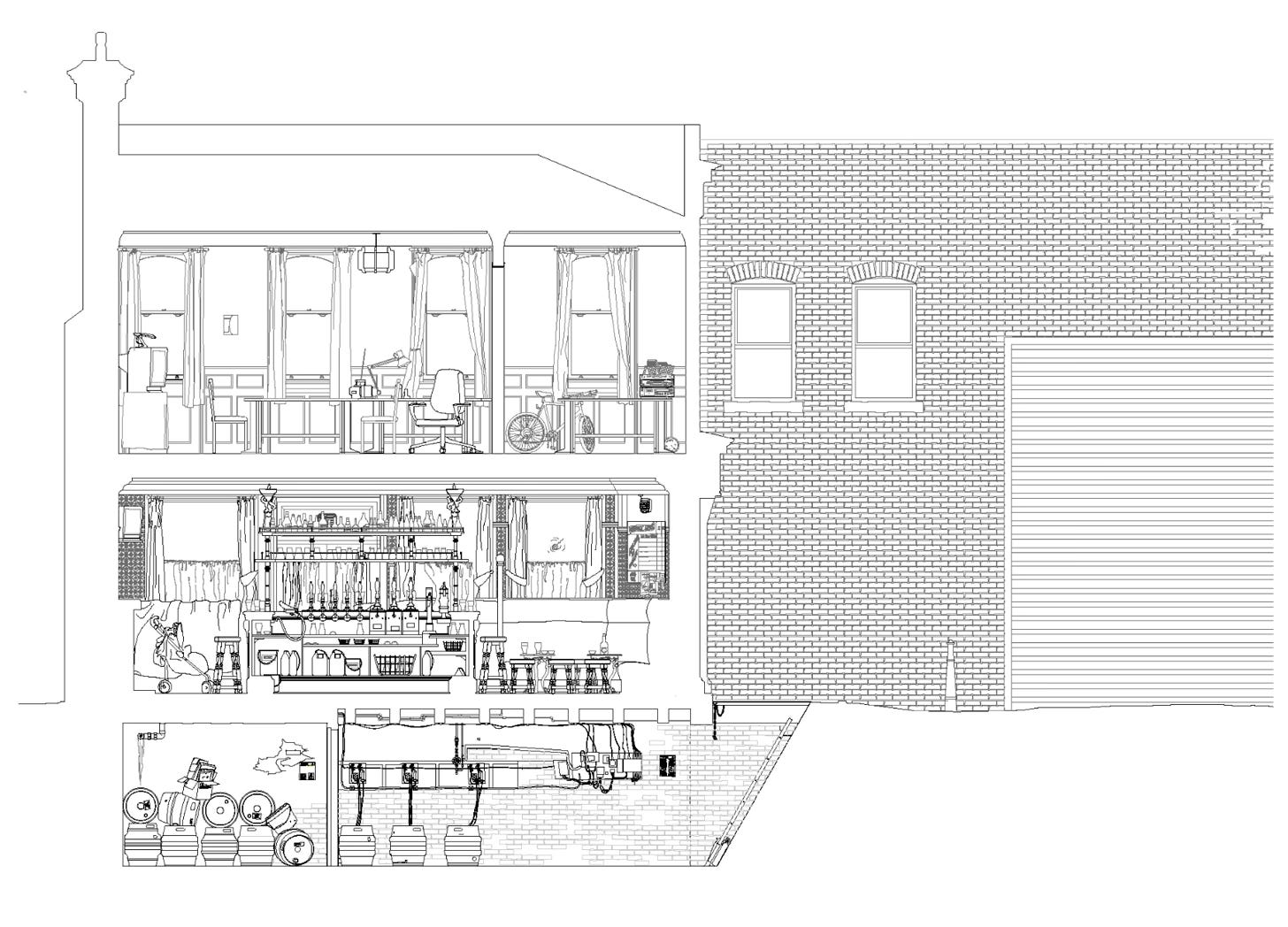
The Public House project, incidentally, many years later led myself and Cristina Monteiro to co-edit Public House: A social and cultural history of the London pub (Open City, 2021), a book that contained several of the drawings made during that first student project. But the furniture works that ended the project have not been so widely-seen.
One group of students working on the project was lucky enough to be allocated a pub that was (and is) very close to my heart, the Wenlock Arms in Hoxton. During a particularly boisterous weekday evening at the bar, the students experienced first hand the class-crossing qualities of the ‘Wenners’, including a passionate bar monologue about the pub community from our wonderful friend Patricia Jones. They came away from that evening, after their heads had cleared, with a strong sense of the pub as a community project, and with two particular images in their minds. The first image was of a ramp, hand-made by one of the regulars to allow local (and legendary jazz pianist) Johnny Parker to navigate a level change inside the pub with his mobility scooter. The ramp sat in a corner of the pub usually, but when Johnny arrived would be brought out so he could reach the gents’ loos at a reasonable pace. The second image was of a bollard outside the pub, installed at some point by Hackney Council right outside one of the pub’s main doors. A resin replica of Napoleonic cast iron bollards, this particular bollard had somehow been damaged and had lost a whole chunk of its top.
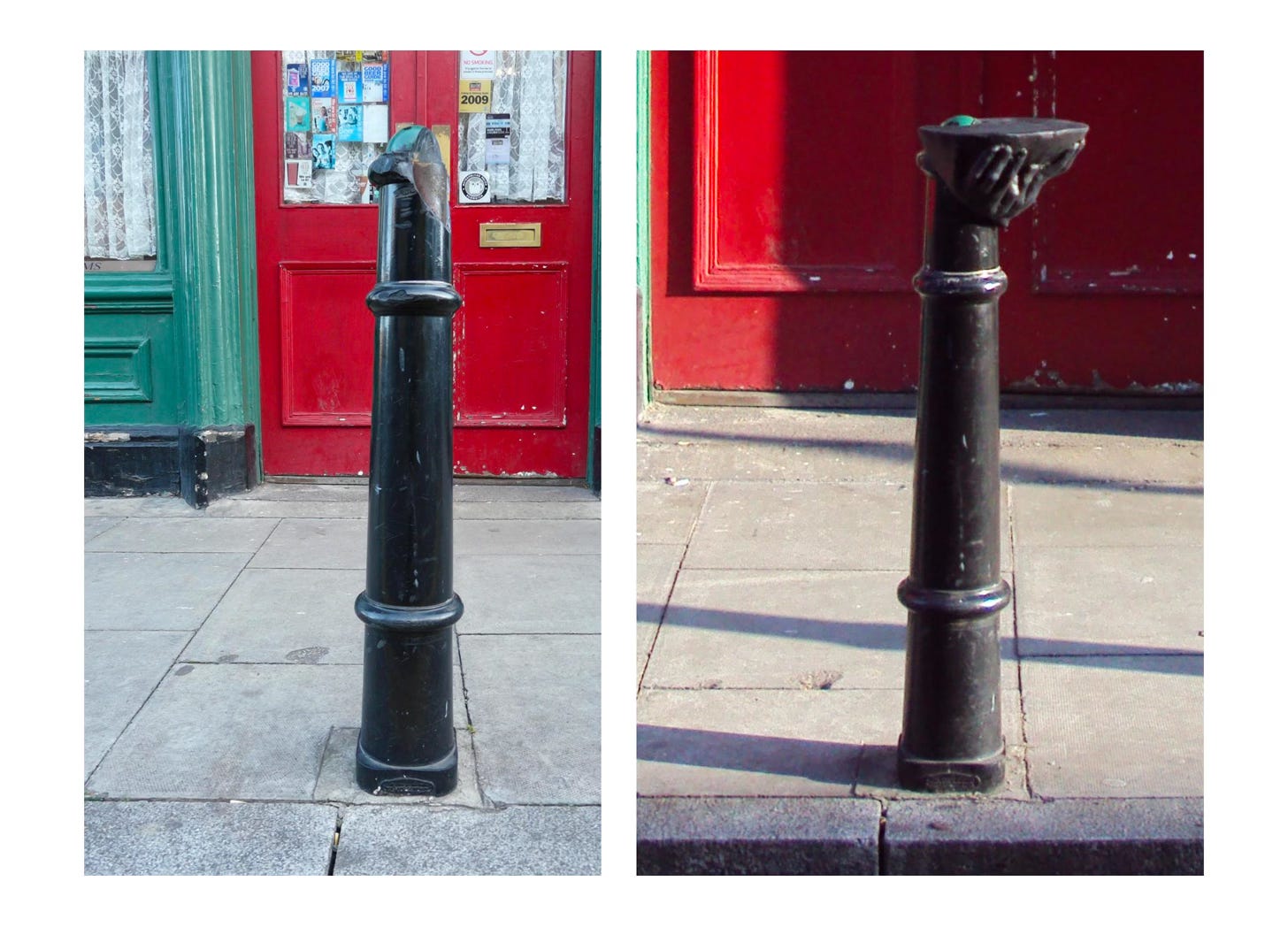
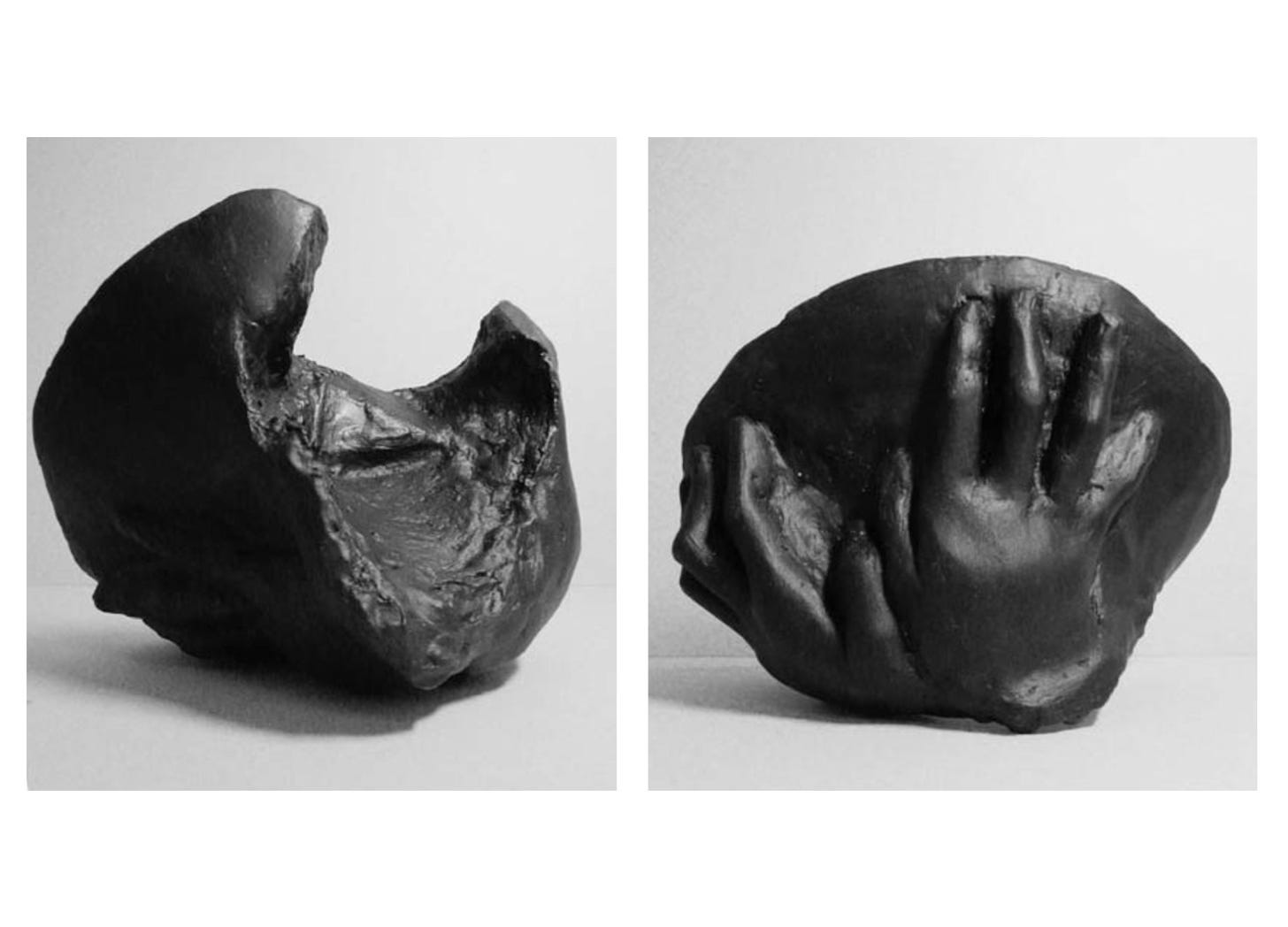
Taking the spirit of the ramp and the ‘need’ of the broken bollard, students Liidia Grinko and Sherry Khodabaksh set out to repair the bollard to transform it into a small kerbside table for a couple of pints. The resulting addition - a coal-black cast element more precious than the bollard it was cast against, and including cast human hands ‘holding up’ the table, was not just an elegant ‘flipping’ of bollard into table, it was also a celebration of the spirit of communal repair that pervaded the pub, and an extension of that spirit into the street. It was duly affixed (for a limited season only) to the bollard and used as a convenient pint store by smokers and outdoor drinkers. The students then moved on to the design of community or public buildings that took lessons from the pubs they had studied and the furniture-sized interventions they had made.
Bernd’s lecture this week positioned the Wenlock bollard as the first move in a series of precise works of repair and reimagination undertaken by his practice in the years that followed. Since leaving the UK (and Caruso St John’s London office) Bernd has developed a singular architectural career - based primarily in Berlin - applying a rich, deep commitment to architectural character to works of close attention, constrained budget and intimate adjustment. Whether repairing a trio of rural houses or a decayed brick wall, or recovering the modernist national monument of Hugo Häring’s Gut Garkau through a staggeringly complex and imaginative series of cumulative repairs and adjustments (an ongoing project), Bernd’s work is steeped in the aesthetic and formal possibilities of architecture but also has the playful qualities of a dressmaker or craftsperson who really knows their tools: a stitch in a contrasting colour here, a patchwork repair there, with every deviation from the norm a chance for improvisation or individual flourish. Bernd’s approach to conservation is historically aware but undogmatic, paying attention to previous acts of care (c1970 in the case of Gut Garkau) which conventional conservation approaches might simply sweep away. It is not about fetishisation of the existing architecture but an engagement with it on its own terms, with a view to transforming it for the present in ways that are true to itself but which, perhaps, might never have previously been imagined.
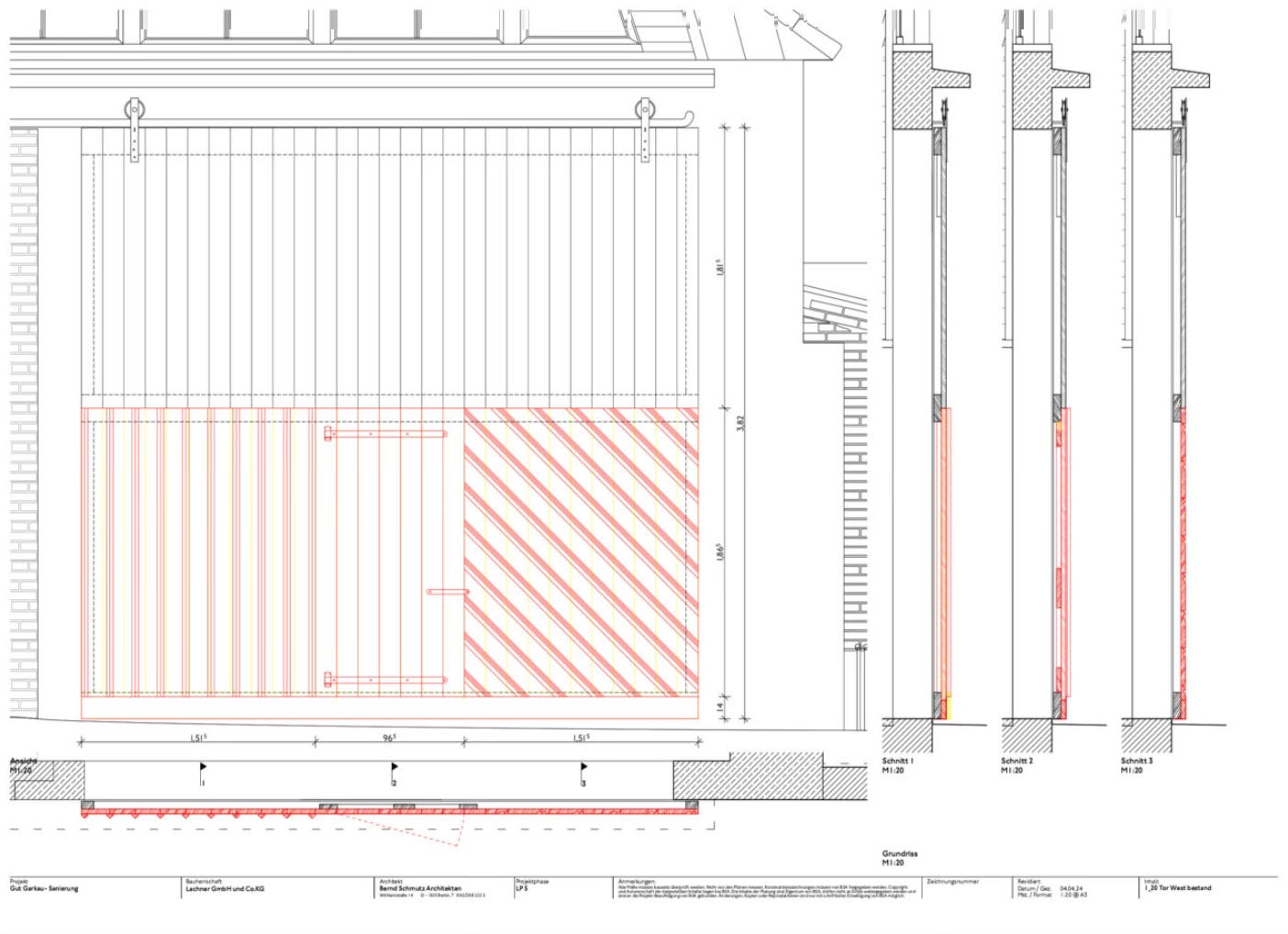
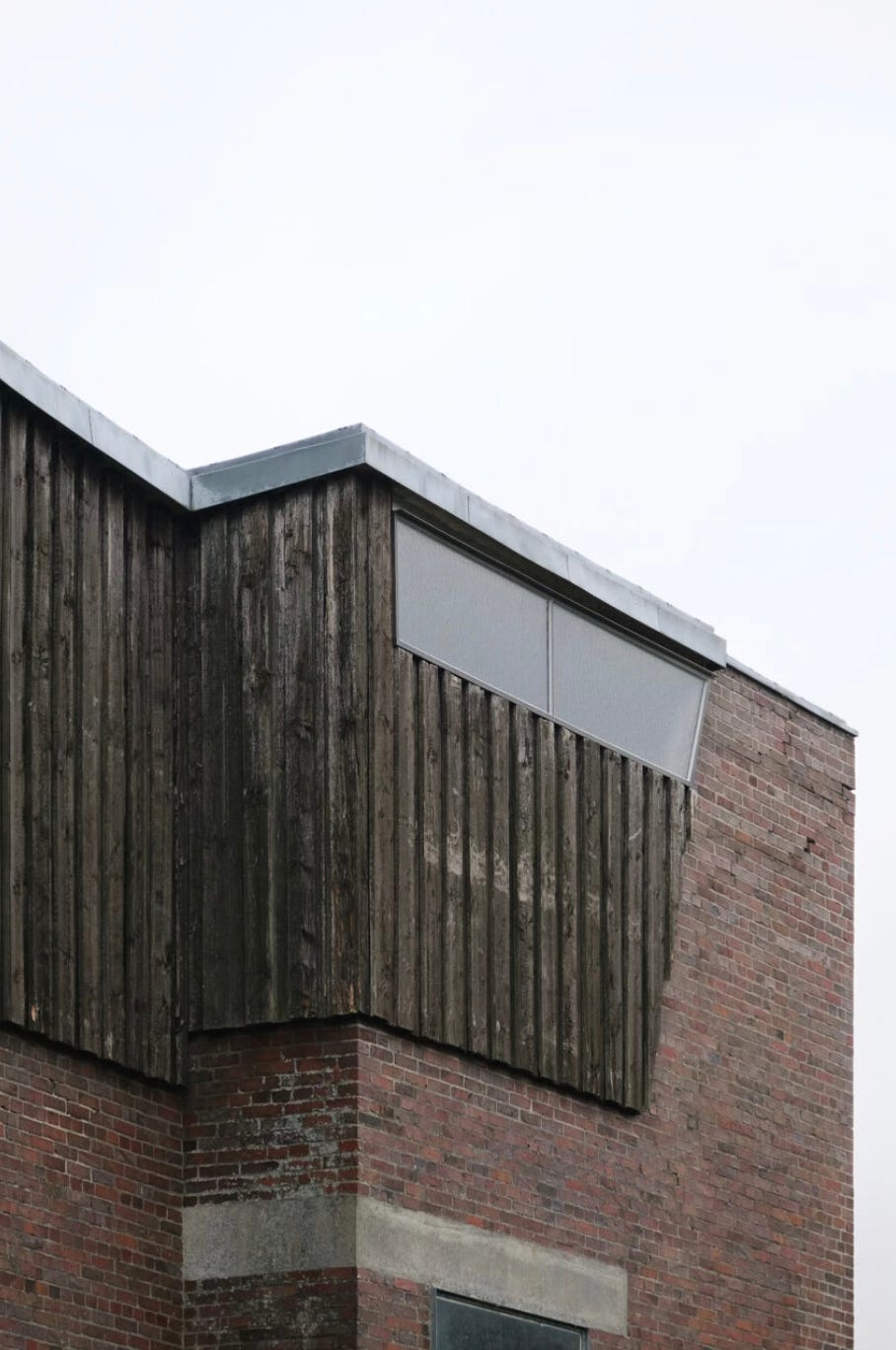
The built environment professions are all-too-gradually waking up to the need to retool our profession and the legislation that frames it in favour of reuse, repair and conservation over new construction. Bernd’s work and teaching, from the Wenlock bollard to Gut Garkau and beyond, is an inspiring assertion of the creativity and profundity that can lie behind the act of architectural repair, and of the myriad approaches that can be brought to bear on this apparently humble act.
Thanks to all the students of Unit 2 that engaged in these briefs (especially the Wenlock ‘crew’ of Liidia Grinko, Ming-Kun Huang, Sharareh Khodabaksh and Mario Soustiel), to Bernd Schmutz and Adam Khan, and lastly to Andrew Clancy and Aoife Donnelly for welcoming us all back to KU so warmly this week.
Gut Garkau photography and drawings © Bernd Schmutz Architekten.
Lovely piece of writing. I didn't know about Bernd's work, but am sure Peter Blundell Jones would have approved -he was obsessed with Gut Garkau